The world of startups is characterized by rapid evolution and fierce competition. In an era where digital marketing is pivotal, the importance of a strong and memorable domain name cannot be overstated. A domain name serves as the digital address for a business, and it plays a fundamental role in shaping brand identity and enhancing online visibility.
Thank you for reading this post, don’t forget to subscribe!For startups, an effective domain name not only establishes a unique presence but also significantly impacts marketing strategies. It acts as a primary tool for branding, often being the first point of contact for potential customers. A well-chosen domain name can reflect the mission and values of a startup, allowing it to resonate with its target audience. This alignment can lead to greater customer trust and engagement, which are essential for growth.
Moreover, in the competitive landscape of fast-growing startups, a strong domain name contributes to search engine optimization (SEO). A domain that is relevant to your business can improve visibility in search engine results, thus driving organic traffic to your website. This is particularly important for startups looking to establish themselves in their respective markets quickly. Effective domain naming strategies can lead to a reduction in marketing costs by enhancing the natural discovery of the brand online.
Choosing the right domain name is crucial; it requires careful consideration of various factors including length, relevance, and memorability. As the first thing customers encounter when they visit a website, the domain name can influence their perception of the brand. In summary, a strategically selected domain name is a vital asset for startups aiming at aggressive growth and long-term success in the digital realm.
Key Characteristics of Effective Domain Names
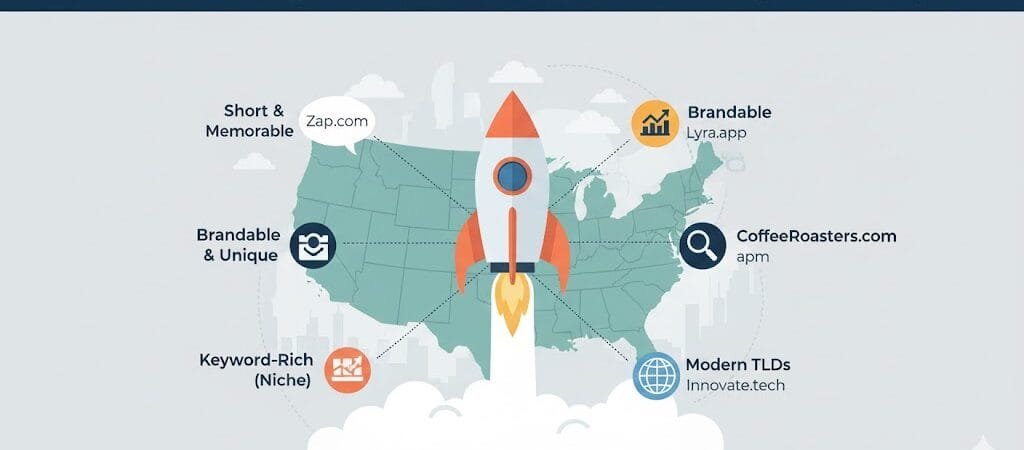
Selecting an effective domain name is crucial for startups seeking to establish a strong online presence. The characteristics of a successful domain name can significantly influence brand perception and user engagement. One of the fundamental qualities of an effective domain name is brevity. Short domain names are not only easier to remember but also facilitate quick typing, reducing the likelihood of user errors during entry. For example, companies like Google and Twitter have demonstrated the power of concise domain names that align with their simple branding strategies.
Memorability is another vital characteristic. A memorable domain name has the potential to leave a lasting impression on users, making it essential for building brand recognition. Startups that employ playful or catchy words in their domain names, such as ‘Dropbox’, create an easy mental connection for users, enhancing recall rates. Keeping the domain name aligned with the core values or offerings of the business also increases the chances of it being remembered.
Ease of spelling plays a crucial role too. Complex or unconventional spellings can lead to confusion, resulting in potential customers misdirecting their web searches. Startups like Airbnb utilize straightforward and intuitive spellings, ensuring that users can easily navigate to their sites without complications.
Relevance to the business is equally important. A domain name that reflects the startup’s services or products can provide immediate context to users. For instance, the domain ‘fooddelivery.com’ clearly communicates its business focus to potential customers. Through the incorporation of these key characteristics—brevity, memorability, ease of spelling, and relevance—startups can establish a strong and effective online presence, paving the way for potential growth and success.
Trends in Domain Name Selection
In recent years, there has been a noticeable shift in the domain names chosen by fast-growing US startups. This trend encompasses various innovative approaches to domain name selection, reflecting the dynamic nature of the digital landscape. One of the more prominent trends is the rise of alternative domain extensions, most notably the use of ‘.co’. Originally designated for Colombia, the ‘.co’ extension has increasingly been adopted by businesses worldwide, positioning itself as a favorable alternative for startups looking to convey a global presence. This extension is often perceived as shorthand for ‘company’ or ‘corporation’, making it particularly appealing for entrepreneurial ventures.
Another noteworthy trend is the creative use of spellings and the formation of entirely made-up words. Startups are increasingly looking for unique and memorable domain names that stand out among competitors. This has led to the emergence of domains that feature unconventional spelling variations or entirely new terms, which can be particularly effective in branding efforts. For instance, companies may combine existing words or alter spellings to create fresh identities, making their web addresses more distinctive and easier to remember.
The reasons behind these trends are multifaceted. First, with the saturation of traditional domain names (particularly the .com extension), many startups find themselves challenged in securing a desired domain that accurately represents their brand. Alternative extensions provide more options and flexibility. Additionally, in an era where digital presence is paramount, the right domain name can significantly influence consumer perception and searchability. Creative spellings and new word formations allow startups to carve out a unique niche in an increasingly crowded market, thereby enhancing brand recognition and memorability.
Branding and Domain Names
In today’s digital landscape, the relationship between branding and domain names is crucial for startups aiming for rapid growth. A domain name serves not only as an online address but also as a significant aspect of a company’s identity. Startups must ensure that their domain names resonate with their brand ethos, fostering recognition and recall among target audiences.
Successful startups often employ creative strategies to align their domain names with their overall brand identity. For instance, companies like Blue Apron and Airbnb have incorporated their core concepts into their domain names. Blue Apron directly indicates its meal-kit delivery service, while Airbnb cleverly combines “air” and “bed & breakfast” to communicate the essence of their platform.
Additionally, startups frequently explore unique domain extensions to enhance their brand narrative. For example, .io domains are popular among tech startups, as they connote innovation and technology appeal. A company such as Eventbrite utilizes event-related keywords within its domain structure to promote its brand effectively. This clear linkage between the domain name and the business operation enhances user perception, thereby driving traffic and engagement.
The alignment of brand messaging with a domain name can significantly contribute to organic growth. Startups like Trello, which features a straightforward and captivating name, illustrate how intuitive domain choices contribute to brand strength. By selecting a name that encapsulates the company’s service, Trello has established a clear brand presence that is easily identifiable and memorable for users.
Ultimately, a well-constructed domain name serves a dual function: it provides an avenue for users to discover a brand while effectively conveying the core identity of the startup. Hence, startups must prioritize the alignment of their domain names with their branding strategies to ensure sustained growth in an increasingly competitive online market.
SEO Considerations in Domain Naming
The impact of domain names on search engine optimization (SEO) is significant, influencing both visibility and user perception. One crucial factor is the inclusion of keywords that are relevant to the business’s niche. Domains that contain primary keywords may rank higher in search engine results, making them more discoverable to potential customers. For example, a startup that provides digital marketing services might benefit from a domain name such as BestDigitalMarketing.com, highlighting their core offerings and enhancing their SEO potential.
However, modern SEO practices are evolving. While including keywords in the domain can still yield advantages, the importance of brandable names is becoming increasingly evident. A brandable domain, such as Marketify.com, offers flexibility and memorability, traits that can improve overall SEO performance through increased click-through rates and user engagement. This transition towards brand-centric domain names reflects a broader shift in SEO, where unique branding often triumphs over simply descriptive keywords.
Additionally, a well-designed domain contributes to user trust and authority, both critical components in effective SEO strategies. Search engines, like Google, tend to favor websites that are perceived as credible and trustworthy. A distinctive domain that effectively encapsulates the brand’s identity can foster that perception. It is worth noting that while keyword strategy in domain naming remains relevant, brandable names may resonate with consumers on a more emotional level, leading to increased shares, backlinks, and resulting in better search rankings.
In summary, when considering domain naming, it is essential to strike a balance between incorporating keywords for SEO benefits and establishing a memorable brand that resonates with consumers. A holistic approach that includes both aspects can greatly enhance a startup’s digital presence and competitive edge in the ever-evolving landscape of online marketing.
The Role of Domain Name Generators
In the ever-evolving landscape of startups, a compelling online presence hinges significantly on an effective domain name. Many fast-growing US startups are increasingly turning to domain name generators as a resourceful solution to create unique and memorable domain names that resonate with their brand identity. These online tools allow entrepreneurs to input keywords related to their business, and in return, they generate an array of potential domain name options. This approach not only saves time but also inspires creative alternatives that entrepreneurs might not have thought of on their own.
Domain name generators facilitate the exploration of various combinations, incorporating a range of extensions, keywords, and creative structures. This is particularly beneficial for startups operating in saturated markets, where relevant keywords might already be claimed. By utilizing these generators, startups can discover inventive options that maintain relevance to their mission while having high memorability and availability. The ability to think outside standard naming conventions can set a startup apart from competitors, enhancing its branding efforts.
Despite their advantages, startups should also be mindful of the challenges posed by using domain name generators. While they provide numerous suggestions, the quality and suitability of the generated names can vary significantly. Not every suggested domain aligns with the intended brand image or company values, which can necessitate further refinement of choices. Moreover, some generated names might lack available registrations, leading to frustration for founders who are eager to secure their online identity. Ultimately, while domain name generators serve as a valuable tool in the creative process, careful consideration and selection are crucial to ensure that the final choice effectively communicates the essence of the brand.
Legal Considerations in Domain Naming
Selecting a domain name is a critical element in establishing an online presence for any startup. However, the process involves various legal considerations that entrepreneurs must navigate to avoid potential pitfalls, especially concerning trademark infringement and domain squatting. In essence, a domain name that is too similar to an existing trademark may expose a startup to legal disputes, wherein the original trademark holder could pursue claims of infringement. Such scenarios could not only result in the loss of the domain name but may also lead to costly litigation.
To mitigate these risks, it is advisable for startups to conduct thorough research before finalizing their domain name. This includes checking the United States Patent and Trademark Office (USPTO) database to confirm that the chosen name does not infringe on any existing trademarks. Additionally, employing services like domain name searches can reveal if the desired domain is already registered or in use by another entity. It is prudent to select a name that is unique and distinguished from competitors and existing brands, ensuring a strong legal foundation for future growth.
Another important consideration is the issue of domain squatting, where individuals or entities register domain names solely to sell them at a higher price to the rightful business owner later. Engaging in proactive measures, such as monitoring domain registrations and being prepared to act quickly if a potential threat arises, can help startups secure their online identity. Some startups have successfully navigated these challenges by obtaining legal advice and collaborating with intellectual property experts to ensure that their domain names are shielded from legal challenges.
In summary, understanding the legal landscape surrounding domain naming is essential for startups to foster resilience and protect their brand identity as they scale in a competitive market.
Case Studies of Successful Domain Naming Strategies
Examining the growth trajectories of successful startups often reveals the profound impact of a well-chosen domain name on their business success. For instance, we take a closer look at the startup Blue Apron, which revolutionized meal kit delivery services in the United States. The name itself reflects their brand ethos—providing a unique culinary experience, which resonates with their target audience. The domain blueapron.com is memorable and reinforces the company’s core offering, leading to substantial market penetration and brand loyalty.
Another illustrative case is that of Airbnb. Originally launched as airbedandbreakfast.com, its domain was lengthy and difficult to remember. The subsequent transition to the succinct airbnb.com was a game changer. This name not only encapsulates the brand’s essence but also allows for easy sharing and marketing—factors critical for viral growth. Their innovative approach to domain naming set them apart in the hospitality sector, contributing significantly to their rapid expansion.
Moreover, consider Slack, a communication platform that chose the simple yet effective domain slack.com. This choice exemplifies a strategic focus on brevity and brand identity. The name ‘Slack’ conveys both friendliness and functionality, a combination that appeals to tech-savvy users seeking efficient communication tools. By adopting a straightforward domain, they ensured instant recognition and ease of accessibility, facilitating their exponential user growth.
Through these case studies, it becomes evident that a carefully crafted domain name can significantly influence the growth and perception of a startup. Innovatively leveraging domain names not only enhances brand identity but also drives user engagement—a crucial element in the rapidly evolving startup ecosystem.
Conclusion and Best Practices
In the rapidly evolving digital landscape, the importance of a well-chosen domain name cannot be overstated, especially for startups striving to carve out their niche in competitive markets. As highlighted throughout this discussion, a strategic approach to domain naming can significantly influence the branding and overall success of a startup.
When selecting a domain name, startups should keep several best practices in mind. First, it’s vital to choose a name that is not only memorable but also relevant to the core values and mission of the business. A domain name should encapsulate the essence of what the startup offers, creating an immediate connection with potential customers.
Another key consideration is simplicity. A straightforward domain eliminates confusion, making it easy for users to remember and spell. Moreover, utilizing appropriate keywords within the domain can also enhance search engine optimization (SEO), thus increasing visibility in search results. While the integration of relevant keywords is beneficial, maintaining a balance is essential to avoid overly complicated or lengthy domain names.
Furthermore, domain extension selection plays a critical role. While .com remains the most recognized and trusted extension, other options such as .co, .io, or industry-specific TLDs can also be informative or relevant, catering to specific audiences. Startups should assess their target demographics and market trends when choosing between these alternatives.
Finally, securing a domain name quickly is crucial, as desirable names can be snatched up swiftly in the dynamic startup ecosystem. Utilizing tools to generate and check the availability of domain names can help streamline this process.
In conclusion, by adhering to these best practices—choosing a memorable and relevant name, ensuring simplicity, integrating keywords wisely, selecting an appropriate extension, and acting swiftly—startups can establish a robust online presence that contributes positively to their growth trajectory and overall success.