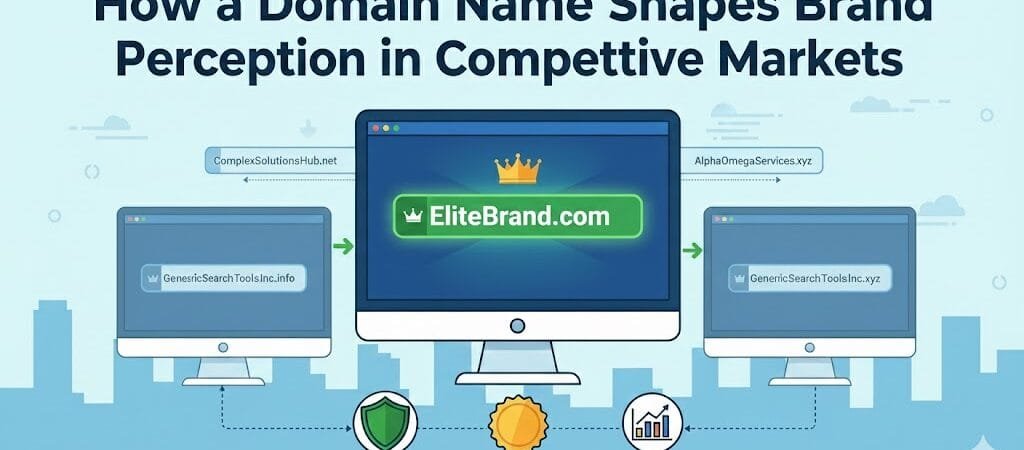
In today’s fast-evolving digital landscape, a domain name holds profound significance as it serves as the foundational element of a brand’s online identity. A domain name is not merely a web address; it is often the first point of contact that potential customers have with a brand. As such, it plays a crucial role in shaping perceptions and establishing credibility in the marketplace.
Thank you for reading this post, don’t forget to subscribe!A memorable and relevant domain name can enhance brand recognition, making it easier for consumers to find and engage with a business. The psychology behind a strong domain name cannot be overstated: it shapes perceptions of professionalism, credibility, and accessibility. When users encounter a domain that is clear, relevant, and easy to recall, they are more likely to view the brand as trustworthy, increasing the likelihood of continued engagement.
In competitive markets, the power of a domain name multiplies, as businesses vie for consumer attention and loyalty. A well-chosen domain can differentiate a brand from its rivals, serving as a strategic advantage that can lead to higher conversion rates. Furthermore, a relevant domain name resonates with the target audience, conveying the essence of the business effectively. This ensures that the brand’s message is not only heard but also remembered.
Moreover, an informative domain can contribute to search engine optimization (SEO) efforts, as including keywords relevant to the industry can improve visibility on Search Engine Results Pages (SERPs). Thus, a domain name is not just a practical necessity but a critical marketing tool that can influence brand perception significantly.
Understanding Brand Perception
Brand perception encompasses the collective impressions, thoughts, and feelings that consumers associate with a brand. It is not merely influenced through marketing efforts but is largely shaped by customers’ experiences, interactions, and perceptions. From the first point of contact, whether through advertisements, product quality, or customer service, a brand begins to construct its identity in the minds of consumers.
The psychological aspects of perception play a crucial role in how consumers engage with a brand. Research suggests that brand perception is formed through a combination of cognitive and emotional responses. Cognitive responses pertain to the informational aspects, such as a brand’s offerings, prices, and reputation, while emotional responses relate to how consumers feel about those offerings. This duality can significantly influence consumer behavior, leading to varying levels of brand loyalty and preference.
For instance, a positive brand experience can enhance the perception of reliability and quality, making consumers more likely to favor that brand over competitors. Conversely, negative experiences can lead to a diminished brand perception, prompting customers to seek alternatives. This phenomenon illustrates the importance of not only delivering an excellent product but also ensuring that accompanying services, such as customer support, align with consumer expectations.
The formation of brand perception also involves social factors, such as peer reviews and social media interactions, which can enhance or tarnish a brand’s image. As consumers tend to seek validation from their social circles, word-of-mouth and online feedback significantly contribute to shaping their perceptions. Thus, it is evident that brand perception is a multifaceted construct that is essential for establishing strong consumer-brand relationships and ultimately drives decision-making processes.
Domain names serve as a vital component in establishing a brand’s overall image, significantly influencing customer perception. The effectiveness of a domain name can be assessed through its readability, ease of pronunciation, and its relevance to the business it encompasses. A well-chosen domain name can evoke a sense of trust and professionalism, while a poorly selected one can have the opposite effect.
Readability is crucial when it comes to a brand’s domain name. A clear, easily understandable domain can lead to higher traffic and better retention. For instance, brands like Amazon.com and Google.com illustrate this well; both names are short, memorable, and straightforward, making them easy for consumers to recall and type into a browser.
Pronunciation also plays a significant role in shaping brand perception. A domain name that is simple to say helps in word-of-mouth marketing. Take Dropbox as an example. Its domain name reflects the brand’s function directly, making it easy for users to discuss and share. In contrast, a domain that is complex or has ambiguous spelling can hinder communication and deter potential customers.
Furthermore, the relevance of a domain name to its associated business is vital for seamless branding. A domain name that encapsulates the essence of the business can enhance customer loyalty and recognition. Consider BestBuy.com—the domain effectively captures the brand’s focus on offering the best deals in electronics. This relevance not only contributes to the clarity of the brand’s message but also aids in Search Engine Optimization (SEO), increasing the likelihood of visibility in competitive markets.
In summary, the role of domain names in branding cannot be underestimated. Through their readability, pronunciation, and relevance, domain names shape a brand’s image and position in the saturating digital landscape.
Impact of Domain Extensions on Brand Credibility
In the digital age, a brand’s online presence is often defined by its domain name, and a crucial component of this identity is the choice of domain extension. Domain extensions, such as .com, .org, and .net, significantly influence brand perception among consumers. For instance, the .com extension is widely recognized as a standard for commercial businesses. Its long-standing reputation makes it a preferred choice for many brands aiming to enhance their credibility and professionalism.
Conversely, alternative extensions like .org are typically associated with non-profit organizations and community-oriented initiatives. This distinction can affect how customers perceive the intended purpose of a website. Businesses using .org might be viewed as less commercial and more dedicated to social causes, which can either reinforce or diminish their brand identity depending on their mission. Moreover, certain industries have adopted specific domain extensions that align with their core values. For example, technology startups often gravitate towards .tech extensions, which instantly communicate innovation and specialization.
The perception of a brand can also hinge on the trustworthiness of the chosen extension. Consumers may instinctively associate certain extensions with legitimacy, while others could invoke skepticism. As such, aiming for a well-regarded extension is crucial in building and maintaining brand credibility. In competitive markets, a suitable domain extension can set a brand apart from its competitors by conveying quality and reliability. Companies must carefully consider their options and select an extension that not only aligns with their brand identity but also resonates with their target audience. This strategic choice can ultimately contribute to a stronger overall image in the digital landscape.
SEO and Domain Names: The Connection
The relationship between domain names and search engine optimization (SEO) is crucial, especially in today’s competitive online landscape. A carefully chosen domain name can significantly enhance a brand’s visibility and influence its ranking on search engines. One of the primary ways that a domain name contributes to SEO is through the inclusion of relevant keywords. When potential customers type queries into search engines, having targeted keywords in the domain can improve the likelihood of appearing in search results. For instance, a domain like “bestorganictea.com” could rank better for searches related to organic tea as opposed to a more generic domain.
In addition to keywords, domain extension plays a vital role in SEO. Traditional domain endings such as .com, .net, or .org are often preferred and may carry a level of trustworthiness among users. This perceived credibility can enhance click-through rates, elevating a brand’s performance in search rankings. Furthermore, domain names that are easy to spell and remember tend to receive more traffic, contributing positively to a brand’s overall SEO strategy. A straightforward domain can lead to higher direct visits, which search engines may interpret as a sign of quality, subsequently boosting rankings.
Moreover, domain age and history can also influence SEO outcomes. Older domains that have maintained a good reputation are often favored by search engines compared to newer ones. This aspect underscores the importance of not only selecting the right domain but also investing in the longevity and credibility of that domain through consistent branding and quality content. Thus, firms must recognize that the synergy between domain names and SEO is fundamental not only for search engine visibility but also for establishing a formidable brand presence in highly competitive markets.
Case Studies: Brands That Got It Right
Numerous brands have recognized the significant impact that a well-chosen domain name can have on their overall brand perception. One notable example is the online retailer Zappos, which not only offers a hassle-free shopping experience but has also built strong brand equity largely due to its memorable domain name, zappos.com. The name itself is catchy, easy to spell, and aligns perfectly with their customer-centric ethos. This strategic choice has contributed to Zappos being perceived as a friendly, accessible brand in the highly competitive e-commerce landscape.
Another exemplary case is the brand MailChimp, which utilizes its domain name, mailchimp.com, to create a unique identity. The whimsical nature of the name reflects the fun and approachable branding strategy of the company, which specializes in email marketing. By incorporating a playful character, MailChimp has managed to stand out from its competitors who often have more traditional tech-oriented names. This clever branding has fostered a strong connection with users, contributing to sustained growth and market presence.
A third case to consider is GoDaddy, an industry leader in domain registration and web hosting. By employing the straightforward domain name godaddy.com, the brand effectively communicates its purpose and service offerings. The directness of the name enhances brand recall, making it easy for customers to associate the name with domain registration services. GoDaddy’s branding has resulted in a deep-rooted presence in the competitive technology and web services market, demonstrating how a strategic domain name can underscore brand identity.
These case studies highlight the essential role that domain names play in shaping brand perception, making it clear that an impactful domain name can lead to enhanced recognition and sustained success in competitive industries.
Potential Pitfalls: What to Avoid
Selecting a domain name is a critical step in establishing an online presence, yet many businesses frequently make significant errors that can adversely affect their brand perception. One common mistake is choosing a domain name that is overly complex or misleading. Names that are difficult to spell or pronounce can lead to confusion among potential customers, making it less likely they will revisit or recommend the site. This complexity can detract from the brand’s credibility and recognizeability in a crowded marketplace.
Another pitfall encountered by businesses is the oversight of domain name availability. It is not only essential to consider the primary domain extension, such as .com or .net, but also to ensure that the desired name is available without litigation concerns. Failing to research existing trademarks may lead to legal complications that can tarnish the brand’s image and lead to costly rebranding efforts. Furthermore, using a domain name that closely resembles that of an established competitor can foster confusion and may inadvertently dilute brand identity.
International implications are often overlooked when choosing a domain name, particularly for businesses that aspire to reach a global audience. A name that is perfectly acceptable in one culture may bear unintended negative connotations in another, which can hinder international market penetration. By neglecting to consider cultural sensitivities or language differences, brands risk alienating a substantial portion of their target audience. The selection process should therefore include comprehensive research, ensuring that the chosen domain name positively reflects the brand ethos while being contextually appropriate across various markets.
Future Trends: Domain Names in the Digital Age
The evolving landscape of technology and shifts in consumer behavior are significantly influencing the future of domain names, which play a crucial role in shaping brand perception. One notable trend is the emergence of new domain extensions. With a multitude of top-level domains (TLDs) available today, businesses can select extensions that more accurately represent their brand identity. For instance, .tech, .design, and .ai are gaining traction among tech-driven companies, allowing them to establish a unique online presence that aligns with their industry sector.
Furthermore, the influence of social media handles on domain name selection is becoming increasingly pronounced. Companies often strive for consistency across platforms, leading many to choose domain names that mirror their social media usernames. This alignment fosters a cohesive brand experience, making it easier for consumers to find and recognize a brand across various channels.
Alongside these developments, the integration of domain names into broader digital marketing strategies is expected to become more sophisticated. As businesses leverage search engine optimization (SEO) tactics, the choice of domain name will directly impact their visibility in search engine results. This highlights the importance of selecting keywords or phrases relevant to the brand’s purpose in the domain name itself, thereby enhancing brand recognition and recall.
Looking ahead, as consumers increasingly prioritize convenience and connectivity, it is likely that the trend for shorter, memorable domain names will persist. Brands may also exploit the potential of country-code TLDs to localize their marketing efforts and better engage with regional audiences. Overall, the dynamic nature of domain names in the digital age will continue to shape how brands navigate competitive markets.
Conclusion: The Lasting Impact of a Strong Domain Name
The selection of a domain name plays a pivotal role in shaping brand perception, particularly in competitive markets. A well-chosen domain can significantly influence how customers view a brand, its credibility, and its overall value. As businesses strive to establish themselves and differentiate from competitors, the importance of crafting a unique and memorable domain name cannot be overstated.
Throughout this discussion, we have highlighted several critical aspects of domain names that contribute to brand identity. Firstly, a relevant domain name enhances the visibility of a business in online searches, thereby attracting a broader audience. Businesses with domain names that resonate with their target market often enjoy higher engagement rates, leading to increased traffic and, subsequently, potential sales.
Moreover, the association between a strong domain name and customer trust is undeniable. Consumers are more likely to engage with brands that possess a professional online presence, which begins with a well-thought-out domain. This initial interaction can set the tone for customer retention and loyalty—a cornerstone for long-term success.
Furthermore, the future adaptability of a domain name is essential as businesses evolve. A name that captures the essence of the brand while allowing for potential growth or diversification can serve a company well. As markets continue to shift, brands that recognize their domain name as an integral component of their marketing and branding strategy will be better positioned to thrive.
In conclusion, a strong domain name is not just an address; it is a foundational element that shapes perceptions, drives engagement, and ultimately influences business success. Organizations must prioritize domain name selection as a fundamental aspect of their brand strategy to cultivate a strong market presence.