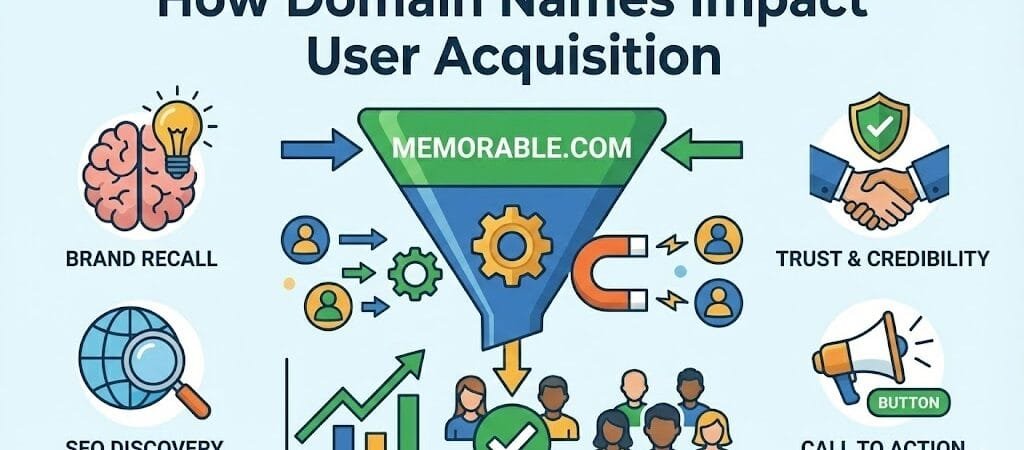
In the rapidly evolving digital marketplace, domain names serve as the cornerstone of online presence, playing a critical role in the realm of digital marketing. A domain name acts as the address through which users access a website, making it an essential component of branding and user acquisition strategies. The choice of a domain name can significantly influence a user’s first impression, which is pivotal in an era where attention spans are fleeting.
Thank you for reading this post, don’t forget to subscribe!Understanding the implications of domain names is crucial for businesses aiming to bolster their user acquisition efforts. A well-chosen domain name not only enhances visibility in search engine results but also fosters trust and credibility among potential users. It can encapsulate the essence of the brand and what the business offers, making it easier for users to remember and return to the site. Additionally, an intuitive domain name can facilitate word-of-mouth marketing, as satisfied users are more likely to share a memorable name.
Moreover, the optimization of domain names plays a significant role in search engine optimization (SEO). Search engines frequently prioritize websites with keyword-rich domain names, allowing such sites to rank higher on search results. This direct correlation highlights the importance of selecting an effective domain name to improve organic traffic and, consequently, user acquisition. As businesses navigate the vast digital landscape, the impact of domain names on user acquisition becomes even more pronounced, making it a fundamental aspect that cannot be overlooked.
In summary, domain names are not merely a web address; they embody strategic elements that influence user perception and engagement. Their significance in user acquisition strategies cannot be understated. This blog post will delve further into effective domain name strategies to enhance user acquisition efforts, establishing a pathway to digital marketing success.
Why the Right Domain Name Matters
The importance of selecting the appropriate domain name cannot be overstated in today’s competitive online landscape. A well-chosen domain name serves as the foundation of a brand’s online identity and can significantly influence its success in user acquisition. First and foremost, a memorable domain name can enhance brand recall, making it more likely for users to return to a website. When potential visitors can effortlessly remember a domain, it not only encourages repeat traffic but also increases the likelihood of referrals through word-of-mouth.
Moreover, a domain name that aligns closely with a brand’s core message can communicate relevance and clarity. When users are presented with a domain that accurately reflects the services or products offered, they are more inclined to engage. For instance, a descriptive domain that provides insight into the business can foster immediate trust and set clear expectations. This relevance is essential for converting casual visitors into loyal customers.
Ease of spelling is another critical aspect when choosing a domain name. A complicated or overly sophisticated domain can deter users from visiting or revisiting a website, as it may lead to frustration when attempting to navigate to it. Simple, phonetic spellings ensure that users can easily recall and access a site, thereby increasing the website’s overall traffic and user engagement.
Additionally, establishing credibility is vital, especially for new businesses looking to make their mark. A professional-sounding domain name can enhance a brand’s perceived legitimacy, positively influencing user decisions. Credibility translates directly into user trust, which is paramount in moving visitors through the sales funnel. Ultimately, the right domain name plays a crucial role in shaping user perceptions and guiding user acquisition strategies.
The Relationship Between Domain Names and SEO
Domain names play a critical role in search engine optimization (SEO), serving as an essential component that influences visibility and organic traffic. A well-chosen domain can positively affect search rankings, making it easier for potential users to find a website. One of the key strategies for optimizing domain names is the inclusion of relevant keywords. Keyword-rich domain names can enhance SEO efforts by providing search engines with contextual clues about the site’s content. When users enter search queries incorporating these keywords, websites with matching or related domain names can appear higher in search results.
Moreover, the age of a domain can significantly impact its SEO performance. Older domains are often associated with established authority and credibility, which search engines tend to favor. This is because search engines aim to provide users with the most reliable and trusted sources of information. Consequently, a domain that has been active for several years may have a ranking advantage over newer domains, all else being equal. This highlights the importance of not only selecting a suitable domain name but also maintaining it over time to build its authority in the digital landscape.
Additionally, the overall perceived authority of a domain, which can be influenced by factors such as the quality of the content published, user engagement, and backlink profiles, is crucial for SEO. High-authority domains are more likely to rank well and drive organic traffic, benefiting from the trustworthiness they’ve cultivated over time. Therefore, businesses and website owners must consider how their domain names contribute to their overall SEO strategy.
User Trust and Domain Extensions
The choice of domain extension plays a significant role in shaping user trust and influencing website engagement. When users encounter a website, one of the first aspects they notice is the domain extension, which can affect their perception of the site’s credibility. Extensions like .com, .org, and .net have long been established as standard options, often associated with reliability and professionalism. Specifically, the .com domain extension is frequently the most recognized and trusted among users, as it is prevalent in commercial businesses. Users often perceive .com domains as more credible and legitimate, leading to higher chances of trust and engagement compared to lesser-known extensions.
Conversely, domain extensions like .org are typically associated with non-profit organizations, educational institutions, and community-focused entities. Such extensions tend to evoke a sense of altruism and transparency, which may particularly appeal to users who prioritize ethical engagement and social responsibility. As such, utilizing a .org domain can be effective for organizations aiming to build trust among users who value these qualities.
Additionally, newer domain extensions have emerged, providing a wide array of options to cater to various industries and interests. Extensions such as .tech, .design, or .health can be advantageous for specific sectors, offering an opportunity for businesses to align their web presence with their brand identity. However, while these newer options might appeal to niche audiences, there remains a risk of lower trust levels compared to traditional extensions. Users may still associate novelty with unproven legitimacy, which could deter engagement.
In summary, choosing the right domain extension is crucial for fostering user trust. The familiarity and reliability offered by traditional extensions can significantly influence user interactions, guiding potential customers towards a more favorable perception of the site and its offerings.
Branding and Marketing through Domain Names
The selection of domain names plays a pivotal role in the branding and marketing strategies of any business. A well-chosen domain name not only establishes an online identity but also enhances the visibility and recall of a brand among potential customers. In today’s digital landscape, the significance of having a memorable and relevant domain name cannot be overstated; it serves as the first point of contact for consumers seeking to learn more about a company or its offerings.
When developing a cohesive domain strategy, businesses should strive for names that embody their brand’s essence and values. This involves selecting keywords that connect the domain to the brand’s mission and objectives. A keyword-rich domain name can improve search engine visibility, making it easier for potential customers to find the brand online. Additionally, it generates a stronger association between the domain name and the company’s core offerings, enhancing market positioning.
Consistent branding across all marketing channels, including the domain name, is essential for creating a unified brand experience. Utilizing a domain name that resonates with marketing efforts allows businesses to achieve greater recognition in their advertising campaigns. For instance, when a domain name reflects the message or theme of a marketing campaign, it reinforces brand recognition and aids consumers in retaining the information. This is particularly crucial in advertising environments saturated with competing messages, where having a distinctive domain can stand out and lead customers back to the website.
Furthermore, effective brand recall is increasingly linked to online behavior; hence, a short, easy-to-pronounce domain name boosts user acquisition significantly. Brands that invest in coherent domain names increase their chances of sustaining customer engagement, leading to higher retention rates and ultimately, a more successful marketing campaign.
The Role of Domain Name Length and Complexity
The length and complexity of a domain name significantly influence user acquisition and retention. Users typically favor domain names that are short, straightforward, and easy to remember. This preference underscores the importance of brevity in domain selection. For instance, shorter domain names can often lead to higher user engagement rates, as they are easier to type and less prone to errors when entered into browsers. A concise domain name also facilitates better recall, making it more likely that users will return to the site in the future.
Furthermore, the complexity of a domain name can create barriers to user acquisition. Domains with complicated spellings, excessive characters, or special symbols can deter potential visitors. Potential users may struggle to remember or accurately replicate overly complex URLs, resulting in missed traffic opportunities. Clear, simple language in domain names aligns more closely with user expectations and preferences, enhancing overall usability and effectiveness.
To optimize for user acquisition, businesses should follow several best practices when crafting their domain names. Firstly, aiming for a domain name length of around 6 to 14 characters is often ideal, striking a balance between being memorable and descriptive. Additionally, avoiding hyphens and numbers is recommended, as these can create confusion and complicate verbal communication of the domain.
Moreover, the use of relevant keywords can provide clarity and context, helping users understand the website’s purpose at a glance. This approach not only aids in user acquisition but can also enhance search engine optimization (SEO). In conclusion, prioritizing a short, simple, and relevant domain name can significantly improve user acquisition efforts, making it an essential component of a successful digital strategy.
The Impact of Typos and Misspellings on User Acquisition
The selection of a domain name is a critical decision for any online presence, yet many businesses fall into the common trap of using domain names that are prone to typos or misspellings. These errors can have a significant adverse impact on user acquisition, leading potential visitors to alternative websites rather than the intended one. For instance, a simple typographical oversight can divert traffic to a competitor, thus reducing the overall visibility and reach of a brand.
When users are presented with a domain name that is difficult to spell or easily misremembered, the likelihood of correctly typing it into a web browser diminishes. For example, domains with unconventional spellings can lead to confusion. Additionally, if a website’s name includes similar-sounding words, users might mistype the URL, resulting in loss of traffic and potential revenue. In essence, precision in domain naming is paramount to ensuring that users arrive at the correct site.
To mitigate these risks, businesses should consider employing straightforward, intuitive domain names that reflect their brand identity. Utilizing traditional spellings and avoiding creative alterations can significantly enhance user recall. It is also beneficial to conduct thorough research to ensure the domain name is not only unique but also readily identifiable. Testing several options with potential users can provide insights into which names are most memorable and least likely to result in errors.
In summary, the impact of typos and misspellings in domain names should not be underestimated, as they play a crucial role in user acquisition and retention. By prioritizing clarity and simplicity, businesses can better position themselves to attract and retain website visitors, thereby enhancing their online success.
Successful Domain Strategies: Case Studies
Examining successful domain strategies employed by various businesses can provide valuable insights into the effective acquisition of users. One noteworthy example is that of Bluehost, a web hosting company. Initially, the company faced stiff competition in a saturated market. However, by adopting a straightforward and memorable domain name, bluehost.com, the company greatly simplified the user experience. This strategic choice not only aided in brand recognition but also increased organic search traffic, leading to a significant rise in customer acquisition.
Another compelling case is Airbnb, which leveraged its domain name, airbnb.com, to build a cohesive brand identity. The name is reflective of their business model—short-term accommodations—making it easy for users to remember. Employing a user-centric domain name effectively communicated their purpose, which significantly contributed to their user base growth from a few listings to millions worldwide.
Additionally, Dollar Shave Club serves as an illustrative case of how a clever domain can convey a brand message simply and effectively. Their humorous marketing and the domain name, dollarshaveclub.com, resonated well with target audiences. The domain encapsulated their value proposition while promoting viral sharing among users. This approach amassed a considerable loyal user base, showcasing how well-aligned domain branding can drive user acquisition.
Moreover, Dropbox provides a lesson in leveraging a descriptive domain name. Utilizing dropbox.com, they managed to succinctly convey the essence of their service to potential users. This clear association enabled them to penetrate the tech market effectively, resulting in robust user acquisition.
Conclusion: Best Practices for Choosing Domain Names
Choosing the right domain name is a critical step in the process of acquiring users and establishing a strong online presence. As discussed throughout the blog post, the effectiveness of a domain name can significantly affect user acquisition, brand recognition, and overall marketing success. Below is a summary of best practices that businesses should consider when selecting a domain name.
Firstly, it is essential to opt for a domain name that is easy to remember and spell. Complex names or unusual spellings can deter potential users from accessing the site. A simple, straightforward domain also aids in word-of-mouth marketing, making it easier for customers to share the website with others.
Secondly, incorporating relevant keywords into the domain can benefit search engine optimization (SEO), helping the website rank higher in organic search results. As mentioned, strategically using keywords related to the brand or service can attract users actively searching for those terms.
Moreover, businesses should choose a domain extension that aligns with their goals and industry. While .com remains the most recognized extension, alternatives such as .net, .org, or specific country-code domains may be more suitable based on target demographics.
Additionally, it is prudent to check the availability of social media handles that match the domain name. Consistency across digital platforms strengthens brand identity and eases user navigation.
Finally, considering potential legal issues is paramount. Ensuring the domain name does not infringe on existing trademarks helps avoid costly disputes in the future. Overall, a thoughtful approach to selecting a domain name can leverage its potential in enhancing user acquisition, leading to sustainable growth and success in the digital realm.