Premium domain names are a distinctive category in the realm of internet addresses that stand out due to their exceptional characteristics. Unlike standard domain names, which often consist of average length and complexity, premium domain names possess attributes that make them particularly valuable in the online marketplace. A domain can be classified as ‘premium’ based on several criteria including but not limited to its length, simplicity, memorability, and inherent market demand.
Thank you for reading this post, don’t forget to subscribe!The length of premium domain names typically tends to be concise, often comprising one or two words. This brevity not only facilitates easy recall but also augments user engagement, as shorter names are easier to type and share. Simplicity is another key characteristic; an effective premium domain is straightforward, avoiding complex spellings or unconventional phrases that could confuse potential visitors.
Memorability is a significant feature that helps differentiate premium domain names. Names that are catchy or resonate with the target audience tend to leave a lasting impression, encouraging repeat visits and reinforcing brand identity. The market demand for certain keywords or phrases greatly influences the premium classification as well; certain domains may command a higher value based on their relevance in various industries, trends, or cultural significance.
In the digital landscape, domain names serve as a foundational element for establishing an online presence. They act not just as a web address but also as a brand identifier, influencing perceptions and trust among users. The significance of premium domain names lies in their ability to convey professionalism and credibility, thus playing a critical role in the success of businesses operating in an increasingly competitive online environment.
The Psychology of Trust in Domain Names
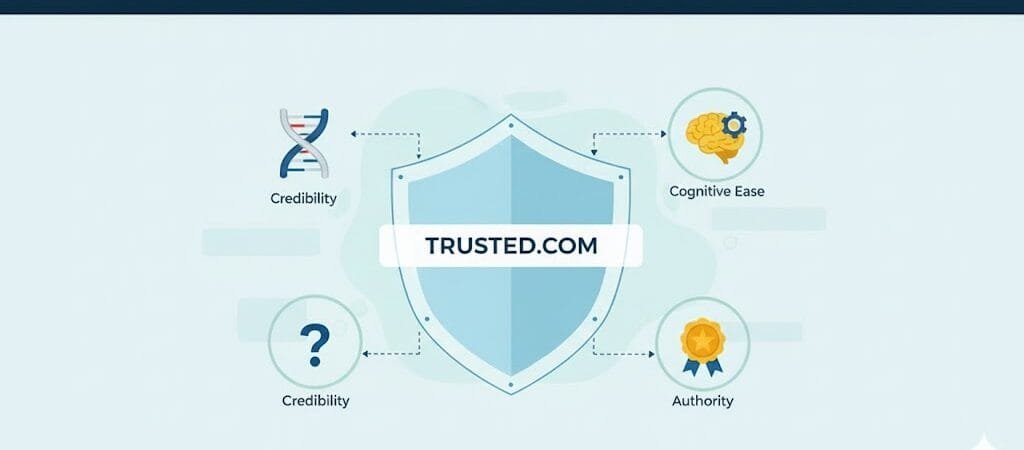
In the digital age, the perception of credibility is deeply intertwined with domain names. Users often form first impressions within seconds of visiting a website, and a substantial portion of that impression is shaped by the domain name itself. A memorable and relevant domain can evoke feelings of trust and professionalism, while an uninspired or irrelevant domain may lead to skepticism and doubt. This psychological response highlights the importance of strategic domain name selection.
When individuals encounter a brand, their subconscious minds assess the domain name against several criteria, which can include familiarity, simplicity, and relevance to the products or services offered. For instance, a domain name that closely aligns with the business’s core offerings can enhance users’ confidence in the brand’s expertise. Conversely, a complex or unrelated domain may create confusion and lead to the perception that the brand is less trustworthy.
Research in consumer psychology underscores that users are more likely to engage with brands that have a clear and intuitive domain name. This aligns with the principle of cognitive fluency—the idea that people prefer information that is easy to process. A domain name that is straightforward and easy to remember can create an initial bond with users, promoting trust and encouraging them to explore the website further.
Additionally, real-world examples illustrate this concept effectively. Companies like Amazon (amazon.com) and Google (google.com) have chosen domain names that are not only simple but also instantly recognizable. These choices foster a sense of reliability and contribute to brand loyalty. In contrast, obscure or overly complicated domain names might deter potential customers, highlighting the profound impact that a domain name can have on trust perception.
The Impact of Domain Names on SEO and Branding
Premium domain names play a crucial role in both search engine optimization (SEO) and branding, significantly influencing online visibility and user perception. By incorporating relevant keywords directly into the domain name, businesses can enhance their chances of appearing higher in search engine results. This increased visibility not only aids in attracting organic traffic but also boosts overall site credibility among users.
For instance, a domain name that clearly represents a business’s offerings can lead to better rankings on search engines, as algorithms favor keyword-rich domains that accurately reflect search queries. Moreover, when a user sees a domain that aligns closely with their search intent, they are more likely to click through, increasing the site’s click-through rates (CTR). Consequently, this can create a positive feedback loop, wherein higher rankings lead to greater organic traffic, further solidifying the domain’s authority.
In addition to SEO advantages, premium domain names contribute significantly to branding efforts. A well-chosen domain name can create a lasting impression, aiding in brand recall and recognition. When consumers encounter a memorable domain, they are likely to remember it, associate it with the products or services offered, and return to it in the future. Consistency in branding is paramount, and the domain name serves as the foundational element that ties all marketing efforts—including social media, content marketing, and advertising—together.
Ultimately, a premium domain name is not just a web address; it is a strategic asset that can enhance both search engine presence and brand identity. In a digital landscape where first impressions are often formed in seconds, the importance of selecting the right domain name cannot be overstated, as it significantly influences user behavior and establishes a platform for future growth.
Case Studies: Successful Brands and Their Domain Choices
In the realm of digital branding, the choice of a premium domain name has proven to be a pivotal element for various successful companies. These case studies illustrate how the selection of a premium domain directly correlates with brand reputation and overall business success.
A notable example is Hotels.com, which capitalized on its straightforward and descriptive domain name. By leveraging a premium domain, the brand not only enhanced its visibility in search engine results but also cultivated trust among its users. The clarity and relevance of the domain name instilled confidence in potential customers, leading to higher conversion rates.
Another compelling case is GoDaddy.com, a leader in domain name registration. Their strong, memorable domain name has been instrumental in building brand identity and driving traffic. As a business that operates primarily online, having a premium domain has reinforced GoDaddy’s position as an authority in the domain registration industry. The perceived professionalism associated with the domain has undoubtedly contributed to customer loyalty and trust.
Furthermore, consider the case of Insurance.com, which illustrates that premium domain names are not just for tech companies. The straightforward nature of its domain name enhances its credibility and relevance, making it easier for consumers to find and trust their services. This clarity results in a higher ranking in search results and allows the brand to capture a larger audience.
In these cases, it is evident that premium domain names have played a significant role in shaping brand narratives and establishing consumer trust. A well-chosen domain not only enhances visibility but also contributes to the long-term success of businesses by fostering a reputation of dependability and professionalism.
Common Misconceptions about Premium Domain Names
Premium domain names are often surrounded by a myriad of misconceptions that can mislead potential buyers and business owners. One of the most prevalent myths is the notion that premium domains are excessively expensive and thus not a viable option for most businesses. While it is true that some premium domains come with a hefty price tag, many affordable options are also available that can still significantly enhance a brand’s online presence.
Another common misconception is the belief that premium domain names are unnecessary for success and can be substituted with less expensive or alternative domain names. However, premium domains offer unique advantages that can directly influence a business’s growth trajectory. A memorable, concise, and keyword-rich domain can improve brand recognition and make it simpler for potential customers to find a business online, leading to increased traffic and conversions. Rather than perceiving premium domains as luxury items, they should be viewed as strategic assets that can yield substantial returns over time.
Furthermore, some entrepreneurs assume that as long as they have a functional website, the specifics of the domain name are irrelevant. This is not entirely accurate. Domain names play a critical role in establishing a brand’s identity and can affect search engine optimization (SEO). A well-chosen premium domain can help in ranking better on search engines due to its relevance and authority, further enhancing visibility among target audiences.
In essence, rejecting the notion that premium domain names are merely extravagant investments can lead to more informed and effective decisions. Understanding the tangible benefits associated with premium domains can help business owners leverage their potential to drive growth and success in the competitive digital landscape.
The Role of Market Trends in Premium Domain Valuation
Understanding the valuation of premium domain names involves a nuanced appreciation of market trends and industry developments. Demand for domain names fluctuates based on various economic factors, making them an interesting subject for analysis. As businesses increasingly recognize the necessity of a strong online presence, the search for premium domains has intensified. This increased demand can significantly elevate the prices associated with high-value domain names, indicating their market value at a given time.
The competitiveness of an industry also plays a crucial role in determining domain name desirability. In sectors where innovation and rapid growth are constant, such as technology or e-commerce, premium domain names become hot commodities. For example, a catchy and relevant domain in a booming niche may see its valuation skyrocket due to the high likelihood of attracting visitors and generating revenue. Conversely, in less dynamic industries, premium domain names may not achieve the same level of valuation, illustrating how market context can dictate worth.
Furthermore, the emergence of new technologies contributes to the evolving landscape of premium domain valuations. With the ongoing advancements in online marketing strategies, businesses often find that certain keywords or phrases gain relevance, subsequently increasing the value of associated domain names. The trend towards mobile optimization and voice search functions also plays a role, as shorter or more intuitive domain names become more desirable. When businesses align their branding with these market trends, they inherently influence the pricing and desirability of their domain names, reinforcing the importance of understanding market forces.
Tips for Choosing the Right Premium Domain Name
Selecting a premium domain name is a critical step in establishing a successful online presence for your business. To make this decision easier, there are several key considerations to keep in mind that can guide you toward the right choice.
Firstly, ensure that the domain name is relevant to your business and industry. A name that reflects your brand’s identity or the products and services you offer will help with brand recognition. When potential customers see a domain that resonates with them, they are more likely to trust your business. Additionally, including keywords that highlight your business can enhance search engine optimization, making it easier for customers to discover you online.
Length is another important factor; shorter domain names are typically more memorable and easier to type. Aim for a concise and straightforward name that can be easily recalled by your audience. Domain names that are too long or convoluted may lead to errors in spelling and typing, potentially driving visitors away.
Legal considerations are essential in the domain name selection process. Prior to finalizing a domain, conduct thorough research to check for existing trademarks associated with your preferred names. This will help you avoid potential legal disputes, ensuring that your chosen domain name does not infringe on another company’s rights.
Lastly, consider the extension of your domain name, such as .com, .net, or .org. A .com extension is generally preferred due to its familiarity, which could enhance trust in your brand. Examining these factors with attention will empower you to make an informed decision, ultimately securing a premium domain name that is not only impactful for your brand but also legally sound.
Future of Premium Domain Names in the Digital Landscape
The landscape of premium domain names is continuously evolving, adapting to the shifting dynamics of digital technology, consumer behavior, and branding strategies. As businesses prioritize their online presence, the significance of premium domains as essential assets has never been clearer. The future of premium domain names is poised to be influenced by significant technological advancements such as artificial intelligence (AI) and blockchain.
AI is expected to play a crucial role in the optimization of domain name selection and management. With the ability to analyze vast data sets, AI can help businesses identify trending keywords and suggest premium domain names that align with current consumer interests. This can lead to the emergence of more targeted and relevant domain names that resonate with specific audiences, elevating the overall effectiveness of online marketing strategies.
Moreover, the introduction of blockchain technology presents new opportunities for premium domain names. The decentralized nature of blockchain can enhance domain security and ownership verification, promoting trust among consumers. This technological shift could lead to a surge in demand for premium domains that are easily verifiable and accessible, further solidifying their value in digital branding.
As consumer behaviors continue to change, the approach to branding will also evolve. Today’s consumers seek authentic, transparent, and memorable online experiences. Premium domain names, which often convey trustworthiness and professionalism, will be increasingly vital in establishing a credible online identity. Companies may prioritize acquiring premium domains not only for their marketability but also for the inherent advantages they provide in fostering consumer trust.
In summary, the future of premium domain names will be shaped significantly by technological advancements and changes in consumer expectations. As businesses adapt to these trends, premium domains will remain a fundamental component of successful online branding strategies, reflecting the ongoing relationship between technology and trust in the digital realm.
Conclusion: The Lasting Impact of Trust in Digital Identity
Trust is a fundamental component of any successful digital identity, particularly when it comes to premium domain names. As explored throughout this blog post, a premium domain name serves as a reliable indicator of credibility and professionalism. This perception of trustworthiness can significantly influence consumer choices, making a compelling case for businesses to invest in a suitable domain name as part of their overall branding strategy.
Moreover, a premium domain name is often seen as a reflection of a company’s commitment to quality. It offers the assurance that the business is serious about its online presence, thereby fostering stronger relationships with customers. When users encounter a reputable domain, they are more likely to engage, explore, and ultimately convert, contributing to business growth and sustainability.
In the competitive landscape of the digital marketplace, where first impressions matter, having a trustworthy domain name can provide a distinct edge. Consumers are more inclined to interact with brands that convey reliability and stability, which in turn enhances the likelihood of repeated business and customer loyalty. This illustrates that the implications of trust extend beyond mere transactions; they establish the groundwork for long-lasting relationships built on transparency and mutual respect.
In summary, the integration of trust into digital identity, particularly through premium domain names, is not just advisable but essential for fostering customer relationships and spurring business expansion. As companies continue to navigate the complexities of the online environment, prioritizing trust in their domain name choices will be crucial in securing a competitive advantage.